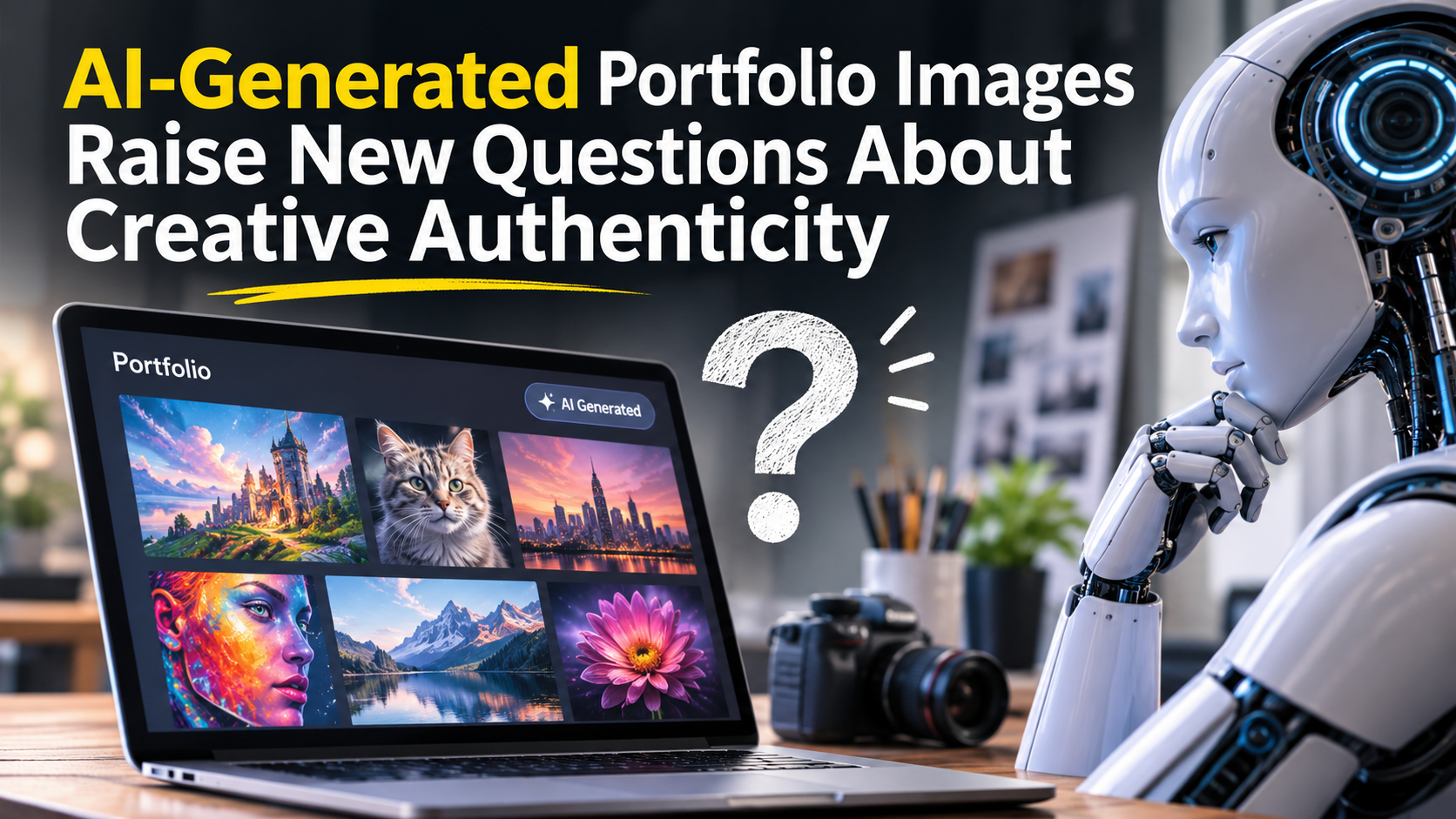
AI-Generated Portfolio Images Raise New Questions About Creative Authenticity
Your portfolio once offered a simple promise about your creative abilities. Today, polished images can also come from a few prompts. Clients and hiring managers face a harder question. How much of the finished project did you actually make?
Why Portfolio Authenticity Is Getting Attention
AI tools help designers test concepts before production begins. Some artists use them for backgrounds or early sketches. Other creators publish generated images as finished portfolio pieces.
Adobe's June 2026 Creators' Toolkit Report surveyed over 16,000 creators across eight countries. Among creators who used or tried creative AI, 75% considered it integrated or essential to their work. Only 49% said they always or frequently disclosed its use. Another 18% seldom or never disclosed its use.
Those figures reveal a real gap between production and transparency. A client commissioning illustrations needs to understand your drawing skills. Someone hiring a product photographer needs proof of actual shoots. Generated examples cannot demonstrate those abilities without additional evidence.
A Finished Image Cannot Explain Your Process
Imagine a portfolio filled with beautiful restaurant interiors. The images might demonstrate excellent taste in lighting and composition. However, they cannot prove the designer planned an actual space.
Try adding the following evidence directly beneath each relevant project:
Share early sketches that show how your original concept developed.
Include editable files or selected layers from the production process.
Explain which client requirements guided your decisions and revisions.
Identify generated backgrounds or objects within the final composition.
Portfolio labels can also separate paid commissions from personal experiments. If you generated a packaging mockup for practice, say so. Otherwise, reviewers may assume the brand approved your design. For collaborative projects, specify the parts completed by teammates.
Visitors can judge your decisions rather than guessing from appearances.
Can an AI Image Detector Verify Portfolio Work?
An AI image detector can flag patterns associated with generated pictures. Its result should never serve as conclusive proof. Editing or compression can change the signals detection systems examine. Genuine photographs may also receive incorrect classifications from some tools.
For another check, inspect available Content Credentials in original image files. These records may identify the software involved or disclose generation details. Missing credentials do not automatically mean someone has hidden anything. Exporting or sharing an image can remove its metadata.
If you are evaluating a candidate, request original files first. Ask about the brief and the revisions behind the project. Compare the answers with the work samples before drawing conclusions.
What Responsible Creators Should Disclose
AI assistance does not erase the work behind every project. Problems begin when generated scenes get presented as photographed assignments.
A brief project note can prevent unnecessary confusion later. Start by labeling generated images instead of presenting them as photographs. Describe the decisions you made and separate those from software output. Credit third-party materials and confirm you have permission for commercial use. Include a completed deliverable that follows an actual client brief.
Copyright deserves attention before you offer generated artwork commercially. The U.S. Copyright Office says purely AI-generated material lacks copyright protection. Human-authored modifications may qualify depending on the creative contribution.
Your portfolio should help people understand what they are buying. Clear credits and visible process evidence can make that decision easier.